What to do if you hate "selling"

👋 Hi! It's Herng. Welcome to my newsletter where I share tips with 5000+ readers on how to outperform at work. New here? Start here.
This is the start of my 12th year at Google. But I almost left less than one year in.
Here's what happened.
Before joining Google, I worked in data analytics, where I was trained to analyze datasets, test hypotheses, and talk about things in terms of statistical significance.
Spreadsheets and trend charts were my comfort zone. I didn't have to figure out how to persuade people. The data usually did it for me.
When I joined Google, however, I took a role with an advertising sales team.
And while my job was not to do pure sales? I still found myself struggling.
Because somehow, I still found myself having to do things that resembled selling – and it felt incredibly icky.
For instance, I had to do things like:
- Conduct workshops for clients and find ways to plug our products
- Convince my colleagues to accept sales quota allocation decisions
- Persuade teammates to adopt new processes or use new tools
- Debate my stakeholders over the performance of their sales figures
Sure, I wasn't technically selling. But I was doing a bunch of things that felt a lot like selling.
I constantly needed to get people to do things – or find ways to change their minds.
It required me to be assertive, critical, vocal – and even a little pushy at times.
It was not my style – and it was exhausting.
So less than a year into Google – I started looking for another job.
The turning point
There are two reasons why I didn't leave – and ended up staying for more than a decade.
The first reason is this: I got lucky.
A couple years into Google, I switched roles, and ended up working for a senior leader named Scott, who was the President of Google Asia Pacific at the time.
Scott set a high bar and rarely minced words. I learned more from him than anybody else in my career – especially regarding how to think and communicate more clearly.
Working for him gave me the skills I needed to do my job better – and helped me realize the value I could bring to others.
(Had I not worked for Scott – this newsletter and most of the learnings I write about would not exist. No question.)
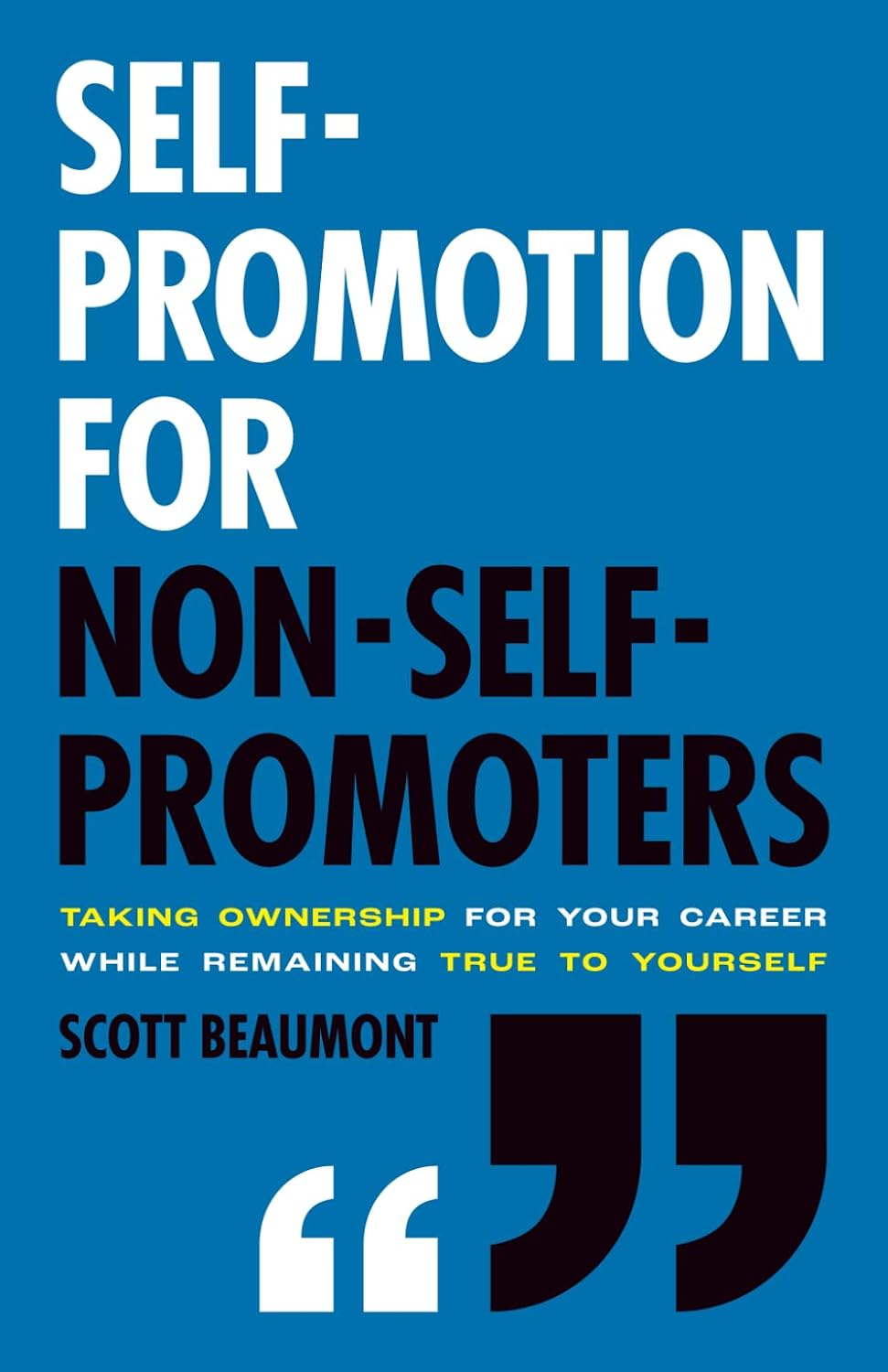
Scott has retired and left Google – but he has just published a gem of a book.
It is a collection of real stories about how brilliant yet non-self-promoting people found ways to establish their presence – without betraying their authentic self.
I first learned these lessons from Scott nearly a decade ago. They are still as timeless as ever.
I'd recommend the book to anyone and everyone. And then some more. See link below.
 Scott Beaumont (Author) Format: Paperback
But now back to our story.
The second reason I stayed at Google for so long is this: when I left my sales team, I joined a strategy and operations team instead.
Initially, I was thrilled to leave the frontlines.
I figured I could just focus on doing good old-fashioned "strategy" going forward – and I wouldn't have to "sell" or force people to do things anymore.
Imagine my surprise when I realized that my new world revolved almost entirely around influencing people to get things done.
But the good thing was this: I was surrounded by experienced people. I saw firsthand what it meant to sell a process, a vision, or a decision.
I realized I didn't have to change the core of who I was in order to influence others more effectively. I just needed a better toolkit.
So if you're like me and don't consider yourself a natural seller? Here's one piece of advice that has helped me get over the hurdle over the years.
Before you "sell" – always do one thing
If you ever find yourself in a situation where you need to get others to do something – hold yourself accountable by asking one thing first:
"What's in it for them?"
As obvious as this principle sounds? It's surprising how many people do not communicate this way.
For example, consider if you were delivering the following ask to your team:
- "Leadership has asked that we all migrate to a new pipeline tracking system by end of month – and so please stop using your own spreadsheets, and start logging your pipeline in this new system."
This is not wrong per se. It's direct and straightforward.
But change management and process migration tend to come with a lot of pain. You're unlikely to get far with such a simplistic approach.
Because you're not speaking to what your audience truly cares about. Soft coercion ("Leadership has asked...") can only take you so far.
But consider if you interrogated yourself a bit harder and asked: Is there any good that can come out of this process for them?
You might then realize there's an opportunity to sell this ask in a more customer-centric way, for example –
- "I'm mindful that we have a process that works today. However, I also know that we tend to get a lot of repetitive questions from our stakeholders – because no one can give them a holistic view."
- "I think that if we can get past the initial hump of process migration – we could free up a lot of our own time as we won't get as many ad hoc questions anymore."
- "In fact, once we establish pipeline rigour – we'll also establish a lot more credibility when we go to leadership and ask for support. I know we've been frustrated at our resourcing asks not landing last quarter – and I think adopting this process could really help."
Let me be clear: you're not pretending that this is the best thing since sliced bread and that everyone should be lining up at the door. You're not trying to be patronizing.
Instead, you're simply showing that you've thought through how this helps your audience – and why it's worth their time and effort.
In other words: you're trying to be on their side.
Now, you may argue that this is just semantics. But it really isn't. And here's why:
- Framing matters. How you anchor people matters. It's not your audience's job to think about what's in it for them. The onus is on you to connect the dots.
- It's a way to sense-check ourselves. If you don't force yourself to think through "what's in it for my audience" – you won't realize instances where you have a very tough sell, and where you might need other levers to get the job done.
Again, people aren't naive. Repackaging a tough message ("I have a crappy product to sell to you") into something else won't magically change the equation.
However, by consciously focusing on what's in it for your audience? A few good things can happen:
- You might just reduce the odds of them having an allergic reaction to a tough message. You might then get some extra airtime – and a better chance at landing your sell.
- You might just be able to pique your audience's interest. This could lead to them asking more questions – and giving you valuable intel as a result.
- You might just earn that extra bit of goodwill from your audience – as you're signaling that you have their interests in mind. You're not just passing along instructions, or attempting a hard sell.
And most importantly?
You might just find that much-needed confidence out of nowhere – as it doesn't feel like you're "selling" anymore.
And this is really the issue at its core.
Selling can feel uncomfortable, awkward, and even icky... because it feels like we're pushing people against their wills. Sometimes, it even feels like begging.
But if you always challenge yourself to articulate "what's in it for them?" Suddenly, you might not feel like you're in an inferior position anymore.
Instead of feeling sheepish that you're here to ask for a favor – you might actually feel in control, recognizing that you've brought some amount of value to the table.
And if you don't see yourself as a natural "seller" – that reframing might just be what you need to find the confidence you need.
For instance, picture yourself "selling" the following messages – and ask yourself how icky you feel before vs. after:
- ❌ "The biggest players in the industry are all using our solutions, and I'm confident that you won't regret purchasing our services either."
- ✅ "We see an opportunity to help your company grow 30% more conversions with our solutions – that's a lot of revenue left on the table, and we'd love to show you how our platform can help you capture it."
Or consider the following contrast:
- ❌ "Our team has spent more than 2 quarters developing this solution, and we've gone through 5 version updates already. We think it's super robust and we're really hoping that your team starts implementing it."
- ✅ "Our team has tested out this solution multiple times, and on average it helps save 30-50% of manhours. We'd really love to implement it for your team so you can save time and focus on high-impact work instead."
You can (and should) also apply this principle to situations that aren't necessarily sales pitches. For example:
- ❌ "Here's a 50-slide presentation on this topic – it shows that we've worked super hard and that we are trustworthy. Therefore, you should feel comfortable giving us your business." (FYI: this is what we call "telling people to look at your blisters.")
- ✅ "Here's 8 slides that are highly curated and focus specifically on the impact we can deliver for your business – because we value your time, and we know what information you care the most about." (Your credibility comes from the ability to curate – not overwhelm.)
The difference is simple, but it does require a fundamental mindset shift.
And once you master it – you might just find selling a little less icky in the future.
🧠 Thanks for reading Herng's Newsletter this week! If this was forwarded to you, join 5000+ readers and subscribe for free here.


